The United Nations coordinates global climate action through a framework of treaties, conferences, and accountability mechanisms that bring 198 countries together to negotiate emission reductions and climate adaptation strategies. At its core, the UN climate system matters because no single nation can solve a planetary crisis alone, and these diplomatic gatherings represent humanity’s primary tool for collective action on rising temperatures, extreme weather, and ecosystem collapse.
This November, the world’s attention will turn to Antalya, Türkiye, where the 2026 UN Climate Change Conference convenes from November 9-20. These annual conferences, known as COPs (Conference of the Parties), serve as the main stage where countries report progress, negotiate new commitments, and wrestle with difficult questions about who pays for climate damage and how quickly fossil fuels should be phased out.
The surge in public interest around UN climate efforts reflects a growing recognition that these aren’t just diplomatic talking shops. The agreements forged in conference halls translate into national policies that reshape energy grids, protect forests, and determine whether vulnerable communities receive funding to build seawalls or relocate from flood zones. When negotiators debate carbon markets or loss and damage funds, they’re essentially deciding how the costs and responsibilities of climate change get distributed across rich and poor nations.
Yet the UN climate process remains mysterious to many. How does a framework convention actually compel action? What happens between conferences? Why do some COPs make headlines while others fade into obscurity? Understanding the UN’s role in climate change means grasping both the promise of international cooperation and its inherent limitations, especially as the window for preventing catastrophic warming continues to narrow.
Key Takeaway: Focus on three metrics that signal real progress: concrete financial commitments with dollar amounts and deadlines, new emission targets that exceed previous pledges and include verification mechanisms, and binding agreements that specify consequences for non-compliance rather than aspirational language.
What the United Nations Climate Change Framework Actually Does
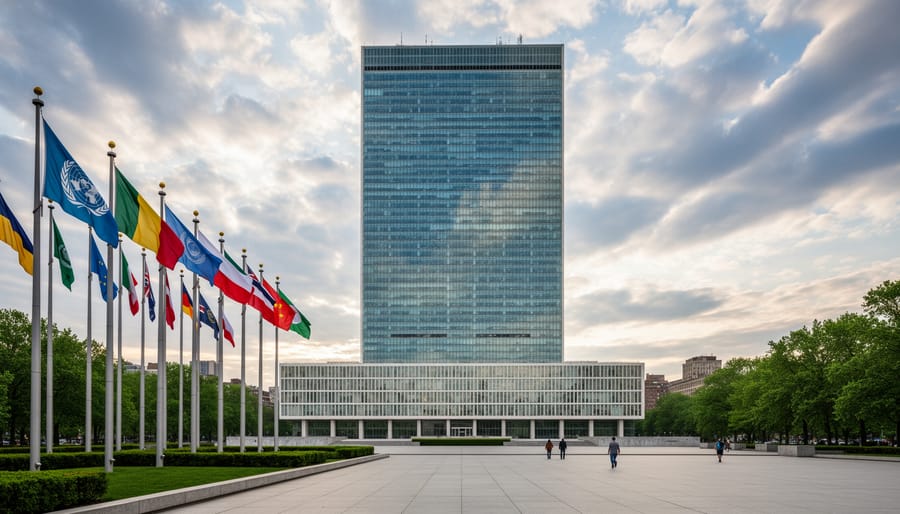
The image shows the United Nations headquarters as a symbol of global coordination on climate policy.
Think of the United Nations Climate Change framework as the world’s shared thermostat, not because one entity controls the temperature, but because it’s where every country comes to agree on the settings. Officially called the United Nations Framework Convention on Climate Change (UNFCCC), this structure isn’t a single organization making rules from above. It’s more like a permanent meeting room where 198 countries regularly gather to coordinate their responses to a problem that ignores borders.
The framework itself is essentially a treaty signed in 1992, establishing the basic principle that nations should work together to prevent dangerous climate interference. It operates continuously through specialized bodies that track emissions, review scientific evidence, and maintain the infrastructure for international cooperation. This ongoing machinery handles the year-round work: compiling climate data from member states, providing technical support to developing countries, and preparing the ground for the big decisions.
Those big decisions happen at the COPs under the UNFCCC the Conference of the Parties meetings that grab headlines. These annual gatherings are where negotiators hammer out specific agreements, set emission targets, and establish funding mechanisms. The November 2026 conference in Antalya will be one of these COPs, serving as a checkpoint where countries report progress and adjust their commitments.
Here’s the crucial distinction: the framework is the permanent structure, while the conferences are decision-making moments within that structure. It’s like the difference between a constitution and elections. The UNFCCC provides the rules and procedures, ensuring climate cooperation continues even between conferences. The COPs are where politics happens, where nations push competing interests, form alliances, and occasionally achieve breakthroughs.
This architecture matters because climate change requires sustained coordination, not just periodic attention. The framework maintains momentum between headline-grabbing conferences, tracking whether countries follow through on promises made during those intense November gatherings. Without this continuous structure, climate action would reset every year, losing the accumulated trust and technical groundwork that makes ambitious agreements possible.
The 2026 Climate Conference: What’s Happening in Antalya
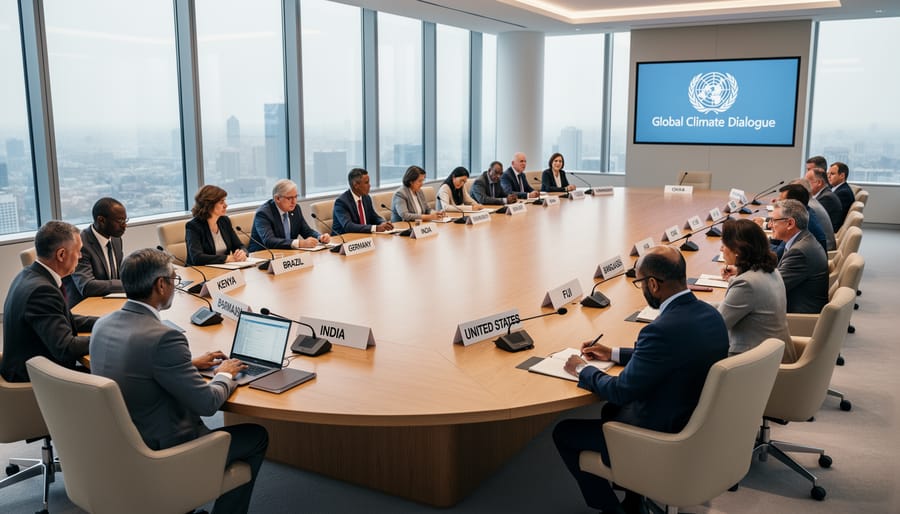
A quiet conference room setting conveys how UN climate negotiations bring many voices into the same global space.
From November 9th through the 20th, 2026, thousands of delegates, scientists, policymakers, and observers will converge on Antalya, Türkiye, for what many are calling a make-or-break moment in international climate diplomacy. The timing isn’t arbitrary. These gatherings happen annually, but each one builds on commitments made at previous conferences, with nations expected to demonstrate progress and strengthen their pledges.
Antalya’s selection as host city carries its own significance. Türkiye straddles two continents, positioning this conference literally at the crossroads between Europe and Asia. The country has experienced firsthand the accelerating impacts climate scientists have warned about, devastating wildfires, unprecedented heat waves, and shifting agricultural patterns. Hosting here underscores that climate change isn’t a distant threat or someone else’s problem. It’s reshaping landscapes and lives right now, from Mediterranean coastlines to mountain valleys.
Conference Detail
Information
Dates
November 9-20, 2026
Location
Antalya, Türkiye
Expected Scale
Thousands of delegates from nearly 200 countries
Key Focus Areas
Emissions reduction commitments, climate finance, adaptation support
What actually happens during these two weeks? Think of it as part summit, part negotiation, part scientific symposium. Countries present updated national climate plans, debate funding mechanisms for developing nations facing climate impacts they didn’t cause, and hammer out technical agreements on everything from carbon markets to forest protection. Side events feature the latest climate science, technological innovations, and grassroots initiatives that often point the way forward when official negotiations stall.
The COP31 dates and location place this gathering at a crucial juncture. We’re now far enough past the 2015 Paris Agreement to measure real-world results against promises, but still early enough to course-correct if we’re falling short. The gap between where emissions need to be and where they’re heading will dominate conversations in Antalya.
Why These Conferences Matter Beyond Political Theater
From Conference Rooms to Your Neighborhood
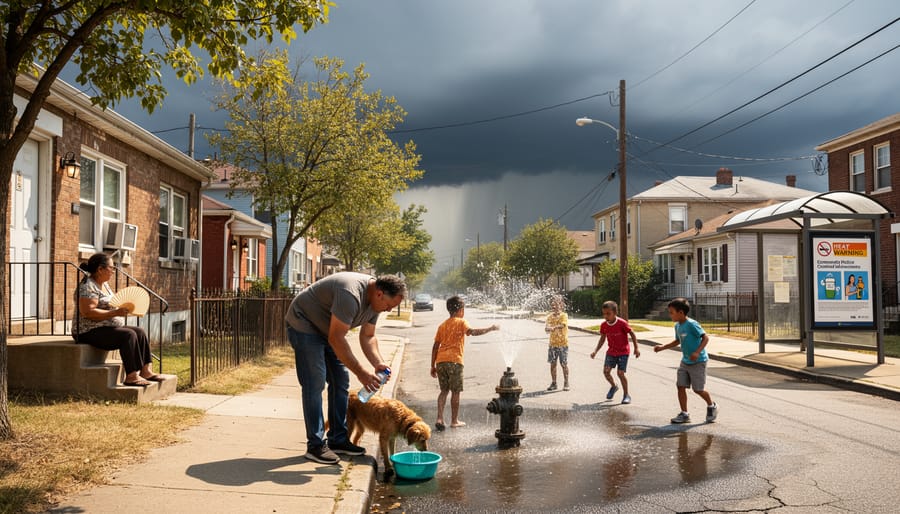
The image reflects how climate pressures show up in everyday environments, where communities feel extreme heat and shifting weather first.
The Paris Agreement didn’t just create headlines, it rewired your city’s building codes. In California, that 2015 accord accelerated standards requiring solar panels on new homes starting in 2020. Your neighbor’s rooftop installation, the one you noticed last spring, exists partly because delegates in a Paris conference room agreed that countries needed binding emissions targets, and those targets cascaded down through state legislatures into local construction permits.
Drive past a new apartment complex and you’re seeing climate diplomacy made concrete. The European Union’s tightened vehicle emissions standards, influenced by successive UN climate negotiations, are why automakers now offer electric models at nearly every price point. That quiet Tesla in your office parking lot reflects decades of international pressure translated into manufacturing decisions.
Consider coastal communities where climate adaptation has become urgent as hurricanes stronger and storm surges reach farther inland. Federal funding for seawalls, upgraded drainage systems, and flood-resilient infrastructure stems from commitments made at climate conferences, agreements that unlocked billions for adaptation projects. If you’ve received a property assessment update noting flood risk for your inherited home that’s the UN framework reaching your mailbox through insurance regulations and disclosure requirements.
These agreements work like plumbing: invisible until you turn the tap. Renewable energy subsidies, efficiency rebates, emissions reporting requirements, all trace back to conference halls where nations argued over decimal points in temperature targets, then went home and changed their laws accordingly.
The Science That Drives the Urgency
The atmosphere doesn’t recognize borders. When carbon dioxide molecules rise from a factory in one country, they mix into the same thin layer of air that wraps around the entire planet, affecting weather patterns thousands of miles away, warming oceans that touch distant shores, and intensifying storms that strike continents the polluter has never seen. This simple physical reality explains why the science of climate demands cooperation that transcends national boundaries.
Think of Earth’s climate system like a shared bathtub. If one person keeps adding hot water while another tries to cool it down, the temperature you both sit in depends on the combined effect. Unlike a bathtub, however, we can’t simply drain the atmosphere and start fresh. Carbon dioxide persists for centuries, accumulating as a heat-trapping blanket that gradually raises global temperatures. The warming itself triggers feedback loops: melting ice exposes darker surfaces that absorb more heat, thawing permafrost releases additional greenhouse gases, and changing ocean currents alter rainfall patterns worldwide.
The interconnection runs deeper than atmospheric chemistry. Ecosystems span borders, migratory species, ocean currents, and weather systems operate as global networks. A drought triggered by warming in one region disrupts food supplies internationally. Rising seas threaten coastal cities regardless of which nations contributed most to emissions. These cascading effects mean isolated national action, however ambitious, cannot stabilize a climate system that functions as a single, integrated whole.
This physical interdependence makes UN coordination scientifically necessary, not merely politically desirable. The climate responds to total global emissions, making collective targets and accountability mechanisms essential for meaningful impact.
The Biggest Challenges Facing UN Climate Negotiations
Walking into a UN climate conference is a bit like watching a massive family reunion where everyone needs to agree on how to split an inheritance they haven’t received yet. The tensions are real, the stakes are enormous, and nobody has veto power over the laws of physics.
The most fundamental challenge is brutally simple: what’s good for the planet isn’t always what’s convenient for any single country’s economy or political survival. A coal-dependent nation faces immediate job losses and energy disruption if it pivots too quickly. An island nation watching its coastline disappear can’t afford to wait another decade for action. These aren’t abstract policy differences. They’re survival calculations happening simultaneously in the same negotiating room.
Money amplifies every other tension. Wealthy nations built their prosperity on decades of unregulated carbon emissions. Developing countries are being asked to skip that industrial pathway and fund expensive clean technology instead. The question of who pays for this transition, and how much, turns every conference into a high-stakes bargaining session. Financial institutions now assess climate risk loans differently than they did a decade ago, but international climate financing mechanisms remain chronically underfunded compared to stated commitments.
Then there’s the enforcement problem. The UN can’t deploy climate police or impose trade sanctions on countries that miss their targets. Agreements rely on voluntary compliance, peer pressure, and the hope that domestic political winds will favor keeping promises made years earlier by different administrations. This creates a predictable pattern: ambitious announcements at conferences, followed by implementation that falls short.
The gap between what countries promise and what they deliver creates perhaps the deepest challenge of all, credibility erosion. When the same nations applauding breakthrough agreements fail to meet previous commitments, skepticism spreads. Citizens lose faith that these gatherings matter. Activists grow frustrated. The next round of negotiations starts from a weaker foundation of trust.
None of these obstacles are insurmountable, but pretending they don’t exist doesn’t help anyone. The physics of climate change doesn’t negotiate, and the November 2026 conference in Antalya will unfold against this complicated backdrop of competing interests, limited tools, and urgent timelines.
What To Watch For as November Approaches
As November draws closer, knowing what to look for transforms you from passive spectator to informed observer. The conference will generate thousands of headlines, but only a handful will reflect genuine progress.
Watch for numbers with teeth. Meaningful announcements include specific emission reduction targets with dates attached, concrete financial commitments measured in billions rather than vague “mobilization” language, and new countries joining existing agreements with binding implementation timelines. When nations pledge to “explore pathways” or “consider frameworks,” that’s diplomatic filler. Real commitments name the year, specify the percentage, and outline verification methods.
Pay attention to which countries show up, and who sends whom. When major emitters dispatch cabinet-level officials or heads of state, negotiations carry weight. Absences or lower-level representatives often signal a nation’s actual priorities, regardless of their public statements. The presence of small island nations and developing countries at negotiating tables, not just as observers, indicates whether vulnerable voices shape decisions.
The climate models and scientific reports released during the conference deserve your attention too. Independent scientific assessments presented by research institutions, not government delegations, provide the reality check against political promises. These reports measure the gap between current commitments and what physics actually requires.
Finally, watch what happens in the week following the conference. Implementation announcements, domestic policy changes, and follow-up meetings scheduled within months, not years, separate genuine momentum from performative agreements. Real progress doesn’t end with a closing ceremony photo.
The delegates who’ll gather in Antalya this November won’t solve climate change alone, and they don’t need to. What they can do, what they have done before, is set the rules that make your rooftop solar more affordable, ensure that coastal cities from Bangladesh to Miami have frameworks for adaptation funding, and create standards that push automakers toward cleaner fleets worldwide.
This isn’t about waiting for governments to fix everything while you recycle dutifully. It’s understanding that the solar panels on your roof exist partly because international agreements made renewable energy investments less risky for manufacturers. The bike lane in your neighborhood might trace back to carbon reduction commitments your country made at a previous conference. Global frameworks create the conditions that make individual choices possible and meaningful.
You don’t need to follow every negotiation detail in November. But knowing what the United Nations Climate Change structure does, how these conferences shape the landscape where we all make daily decisions, transforms you from a passive observer into someone who understands the machinery. The atmosphere doesn’t care about borders. The solutions can’t either. And neither framework nor personal action works without the other.




Leave a Reply