The latest United Nations Environment Programme report delivers a stark message: global temperatures are on track to breach the 1.5°C warming threshold within the next few years. But here’s the crucial detail that separates this warning from despair: the same analysis shows we can still bring temperatures back down and meet the goals set in the Paris Agreement.
This isn’t about moving goalposts or softening targets. The report, titled “UNEP: World set to cross 1.5°C global warming, but can still limit, adapt to and return from higher temperatures,” acknowledges what climate scientists have been signaling for months. We’re likely to overshoot that critical temperature benchmark in the near term. The question now centers on how quickly we act to reverse course and whether we can deploy adaptation strategies fast enough to manage the impacts already locked in.
What makes this report different is its dual focus. Yes, it confirms that current trajectories will push us past 1.5°C. But it also maps out the window that remains open for correction. Think of it as a medical diagnosis that’s serious but treatable, provided treatment starts immediately and follows through consistently. The UNEP analysis looks at both the mitigation pathways to pull temperatures back down and the adaptation measures needed to protect communities already facing climate disruption.
Key Takeaway: The UN report marks a critical shift from treating 1.5°C as an avoidable threshold to accepting we’ll likely cross it soon, though the finding includes cautious optimism that temperatures can still be brought back down through sustained climate action.
What Changed: A New Warning on the 1.5°C Threshold
For years, climate scientists framed the 1.5°C warming threshold as a line we needed to avoid crossing. The new UNEP report fundamentally shifts that narrative: global temperatures are now likely to exceed 1.5°C within the next few years. This isn’t a worst-case scenario anymore, it’s the most probable outcome based on current emissions trajectories and climate data.
What makes this change significant is the certainty. When negotiators crafted the Paris Agreement in 2015, keeping warming “well below 2°C” and “pursuing efforts” to limit it to 1.5°C represented an aspirational target grounded in scientific consensus about what ecosystems and communities could reasonably adapt to. That goal assumed aggressive emissions cuts would begin immediately and accelerate rapidly. They didn’t.
The report doesn’t abandon hope, but it does force us to reckon with a new reality. We’re moving from prevention mode to a dual strategy: limiting how far past 1.5°C we go and planning for an eventual return to safer temperatures. It’s the difference between avoiding a fever and managing one while working to bring it down.
Key Developments from the UNEP Report
1. The Temperature Crossing: From Target to Reality
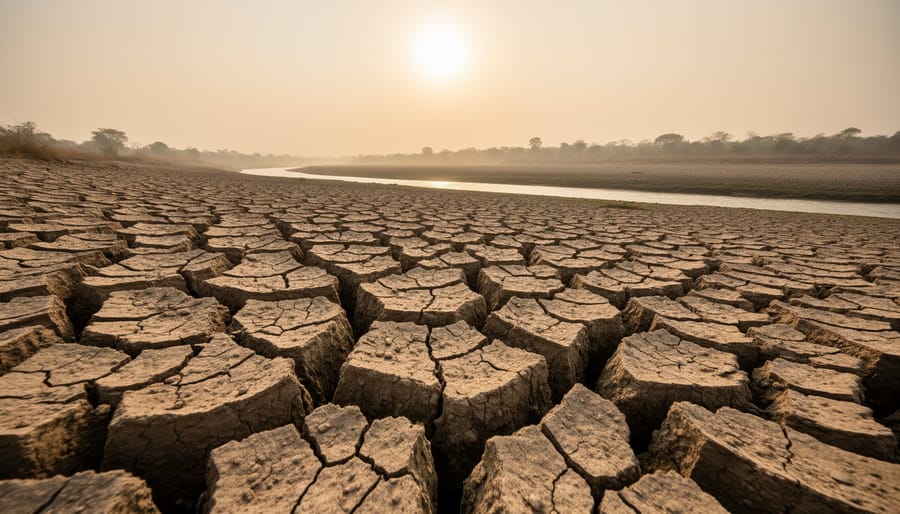
Cracked riverbed conditions symbolize intensifying drought risks and water-stress impacts discussed in climate warnings.
The 1.5°C threshold wasn’t meant to be a finish line we’d cross this soon. When nearly 200 countries signed the Paris Agreement in 2015, limiting warming to 1.5°C above pre-industrial levels was the ambitious goal, the scientific consensus on what might allow us to avoid the most catastrophic climate impacts. Now, according to UNEP’s latest findings, we’re no longer discussing whether we’ll cross that line, but when.
Think of 1.5°C not as a cliff edge where everything suddenly collapses, but more like a fever threshold for the planet. Just as your body can recover from a temporary spike above 38°C, Earth’s climate systems can potentially return from exceeding 1.5°C, but the longer the fever lasts and the higher it climbs, the more damage accumulates. Coral reefs bleach. Ice sheets destabilize. Weather patterns shift in ways that make droughts deeper and storms fiercer.
The report’s projection marks a fundamental shift from aspiration to adaptation. For years, scientists framed 1.5°C as a target we were working toward. That framing has now flipped. We’re instead looking at a threshold we’re likely to breach within the next few years, transforming the conversation from “Can we stay below it?” to “How quickly can we bring temperatures back down after crossing it?”
This isn’t surrender. The science shows recovery remains possible, but the window for preventing the crossing has essentially closed.
2. The Path Back: Recovery Remains Possible
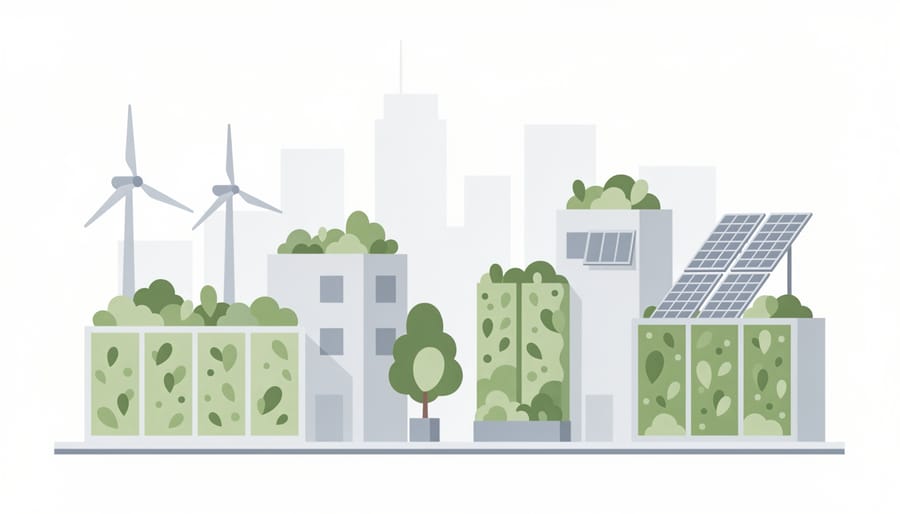
Urban greenery and clean energy elements suggest practical adaptation and recovery efforts that remain possible under Paris-aligned action.
Here’s a different way to think about the threshold: crossing 1.5°C isn’t a cliff we fall off. It’s more like a fever that can come back down with treatment. The UNEP report emphasizes that even after global temperatures exceed the Paris Agreement target, the door isn’t closed on recovery. Scientists describe temperature reversal as achievable through sustained emissions reductions combined with methods that remove carbon dioxide already in the atmosphere.
The physics works because atmospheric carbon dioxide levels determine temperature. When we stop adding CO2 and actively draw it down, temperatures respond. Natural systems like forests and oceans already absorb roughly half of human emissions. Enhancing these processes while cutting emissions creates a pathway back. The report makes clear it’s still possible to limit, adapt to, and return from higher temperatures if action accelerates now.
Is climate change reversible? The answer depends on how quickly we act and how comprehensively. Temperature overshoot doesn’t sentence us to permanent warming, but the longer we stay above 1.5°C, the more damage accumulates to ice sheets, coral reefs, and ecosystems that can’t simply bounce back. Recovery requires both stopping the bleeding and healing the wound through decades of sustained effort across every sector of the global economy.
3. Adaptation and Limitation Strategies
The UNEP report doesn’t just document the temperature crossing, it outlines a dual-track approach that communities, governments, and ecosystems can use to respond. Think of it as a roadmap with two lanes running parallel: one focused on preventing temperatures from climbing even higher, the other on adjusting to the changes already locked in. Both matter, and both require action now.
The framework to limit further warming and adapt includes strategies that range from large-scale policy shifts to ground-level community planning:
Rapid emissions reductions through renewable energy transitions and phasing out fossil fuels
Nature-based solutions like reforestation and wetland restoration that absorb carbon while protecting biodiversity
Adaptation measures such as heat-resistant infrastructure, improved water management, and climate-resilient agriculture
Financial mechanisms to support vulnerable communities in implementing both mitigation and adaptation strategies
What makes this framework practical is its recognition that different regions face different realities. Coastal cities need flood defenses and updated building codes. Agricultural communities require drought-resistant crops and new irrigation systems. Island nations need both carbon reduction commitments from major emitters and immediate resources to protect their homes. The report treats limitation and adaptation not as competing priorities but as complementary tools, you need both a fire extinguisher and a smoke alarm. By framing recovery as achievable even after crossing 1.5°C, UNEP gives policymakers permission to pursue aggressive adaptation without abandoning the fight to reverse warming.
Why This Report Matters Now
This report arrives at a pivotal moment, not because scientists have discovered something radically new, but because what was once a distant possibility has become an imminent reality. Earlier climate warnings spoke of thresholds we might cross if we didn’t act quickly enough. This UNEP report marks the transition from conditional to inevitable, at least in the near term. We’re moving from “if we breach 1.5°C” to “when we breach it.”
The timing matters for international climate policy because we’re in a critical window where nations are reassessing their commitments under the Paris Agreement. Unlike previous reports that could still frame the 1.5°C goal as achievable through prevention alone, this one forces a harder conversation: how do we limit damage, adapt to changes already locked in, and chart a path back to safer temperatures? It shifts the policy focus from pure prevention to a more complex three-part strategy.
Note: Exceeding 1.5°C warming doesn’t mean a single hot day, it represents sustained global average temperature rise that intensifies extreme weather events, disrupts ecosystems, and accelerates sea level rise affecting coastal communities worldwide.
What sets this apart from earlier warnings is its dual message. Past climate reports often felt like countdown clocks, measuring how close we were to a point of no return. This one acknowledges we’ll likely cross the line but insists the door hasn’t slammed shut. That reframing matters because it addresses climate fatalism without downplaying urgency. It’s the difference between “we failed” and “we’re behind schedule but recovery remains possible.”
For individuals, this translates to real-world planning decisions, from evaluating home climate risk in flood-prone areas to understanding why adaptation infrastructure investments are accelerating in their communities. The report essentially says the question isn’t whether climate impacts will intensify in the coming years, but how we respond when they do.
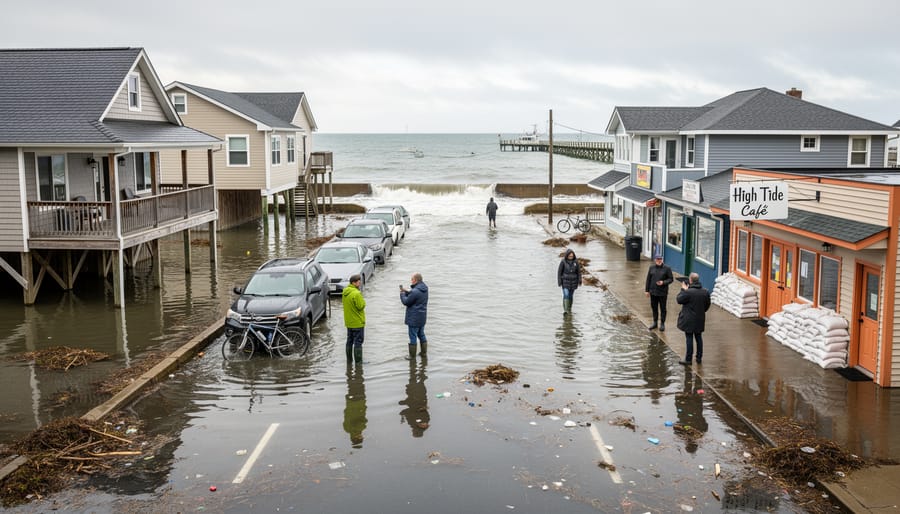
A coastal community faces flooding during high tides, illustrating how climate impacts are felt immediately at the local level.
What to Watch: Next Steps and Critical Timelines
Following this UNEP report, several key areas deserve your attention, not because we know exactly when they’ll unfold, but because they’re the signposts that show whether we’re actually heading toward recovery.
Watch for national pledges at the next UN climate conference. Countries submit updated emission reduction commitments periodically, and the gap between what’s promised and what’s needed tells you whether the world is serious about temperature reversal. Look for whether major emitters strengthen their targets or water them down.
Pay attention to real-world temperature data from organizations like NOAA and the World Meteorological Organization. They track whether we’ve actually crossed 1.5°C warming in practice, not just in projections. The language matters, temporary exceedance versus sustained breach indicates very different futures.
Scientific assessments from the Intergovernmental Panel on Climate Change provide the benchmarks. These reports, released every few years, synthesize thousands of studies to show whether emissions are declining fast enough and whether adaptation strategies are working.
Financial indicators matter too. Watch whether institutions integrate AI climate risk assessments into lending decisions, and whether climate finance flows reach the levels scientists say are necessary, trillions, not billions.
The clearest signal of progress? Emission trend lines. If global greenhouse gas emissions start genuinely dropping year over year, recovery becomes plausible. Flat or rising emissions mean we’re not yet on the path this report says remains possible.
Common Questions About the UN Climate Report
What is UNEP and why does its climate report matter?
The United Nations Environment Programme is the UN’s leading global environmental authority, established to coordinate environmental activities and assist countries in implementing sound environmental policies. When UNEP issues a climate report, it carries significant weight in international policy discussions and reflects consensus among leading climate scientists.
Does exceeding 1.5°C mean it’s too late to act?
No. While crossing the 1.5°C threshold marks a critical milestone, the UNEP report explicitly states that temperature reversal remains possible. Think of it like a fever, exceeding a dangerous temperature doesn’t mean recovery is impossible, but it does require immediate, sustained intervention.
How can global temperatures actually come back down after rising?
Temperature reversal works through dramatically reducing greenhouse gas emissions while simultaneously removing carbon already in the atmosphere through natural solutions like reforestation and technological approaches like carbon capture. If we cut emissions sharply enough and remove existing carbon, the planet’s climate system can gradually cool back toward safer levels.
What are the Paris Agreement goals mentioned in the report?
The Paris Agreement set a global goal to limit warming to well below 2°C above pre-industrial levels, with efforts to limit it to 1.5°C. Nearly 200 countries signed on in 2015, committing to nationally determined emissions reductions to achieve these targets.
How does this report differ from previous climate warnings?
Earlier reports framed the 1.5°C threshold as something we might avoid. This UNEP report shifts the conversation, it says we’re likely to cross that line within the next few years, but crucially, it focuses on how we can still recover and adapt rather than treating the breach as a final failure.
These questions reflect the most common uncertainties readers face when encountering climate reports. The temperature threshold sounds absolute, like a point of no return, which can lead to either panic or resignation. Understanding that UNEP represents coordinated international scientific assessment helps readers evaluate the report’s credibility. Knowing that temperature reversal is physically possible, not just theoretical, changes how we frame the challenge ahead, it’s urgent, but not hopeless.



Leave a Reply